An early spring lifeline for pollinators and butterfly larvae
Field Notes:
- Date & Time: March 10, 2026 mid-morning
- Species: Common Blue Violet (Viola sorority)
- Weather: cool morning, 58°F, partly sunny with a slight breeze
- Location: Central Kentucky Bluegrass region in an urban park, meadow
Observation
In a rolling meadow, Common Blue Violets emerged in clusters nestled among new grasses. Tiny yellow sulphur and orange Fritillary butterflies darted between dandelions and Sweet Beauties. In stark contrast, the nearby oak grove remained barren, with not a single leaf visible, allowing sunlight to illuminate the vibrant patch of early-blooming flowers.
Life Cycle & Habitat
Native to eastern North America, the Common Blue Violet is a perennial plant that returns each spring. It spreads by seed and underground rhizomes. Commonly found in lawns, woodland edges, and meadows, it thrives in partial shade to full sun. While it prefers moist, well-drained soil, it adapts easily to other conditions. Over time, it spreads naturally forming a soft ground cover.
Violets are one of the most important early-blooming native flowers in the region. Often dismissed as “weeds” in traditional lawns, these resilient ground covers serve as a critical nectar source for pollinators when other plants are not in bloom.
Quick Identification
- Low-growing perennial, forming small patches
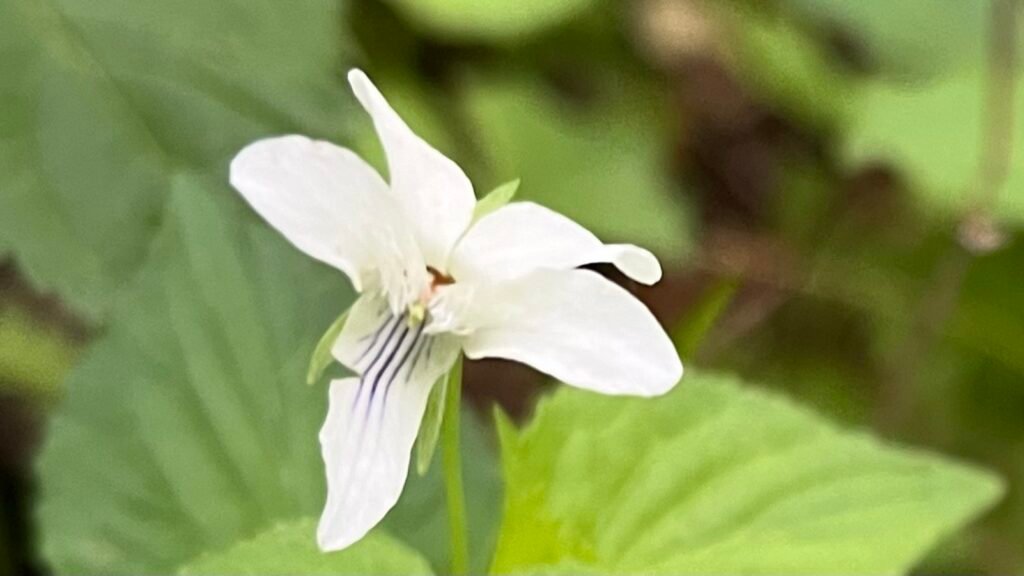
- Heart-shaped leaves with smooth edges
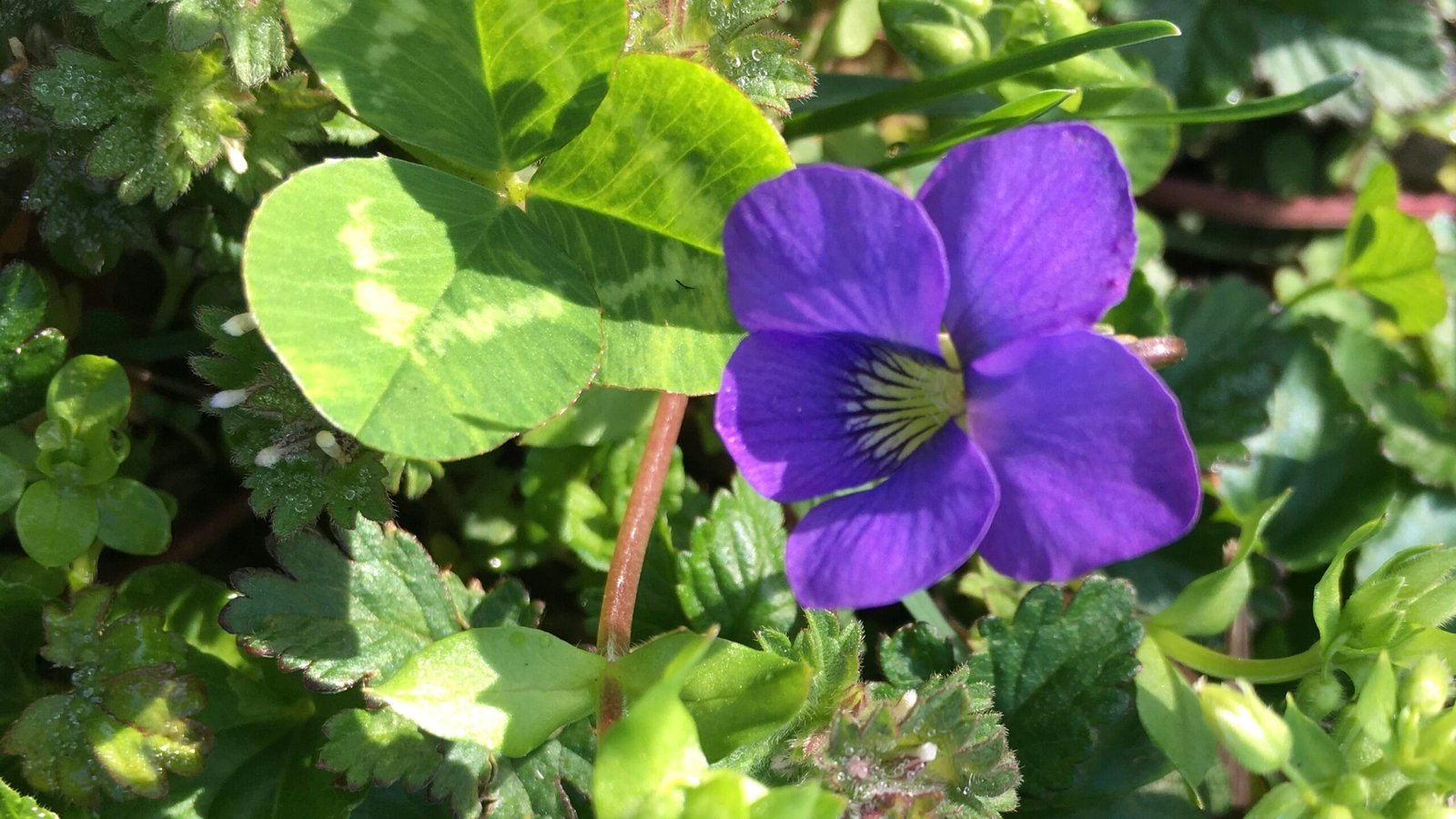
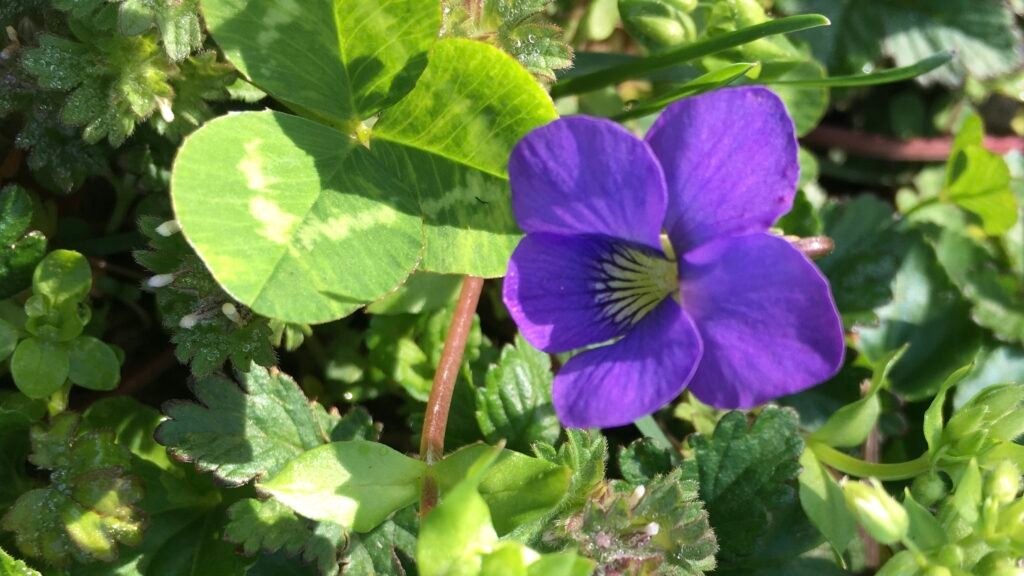
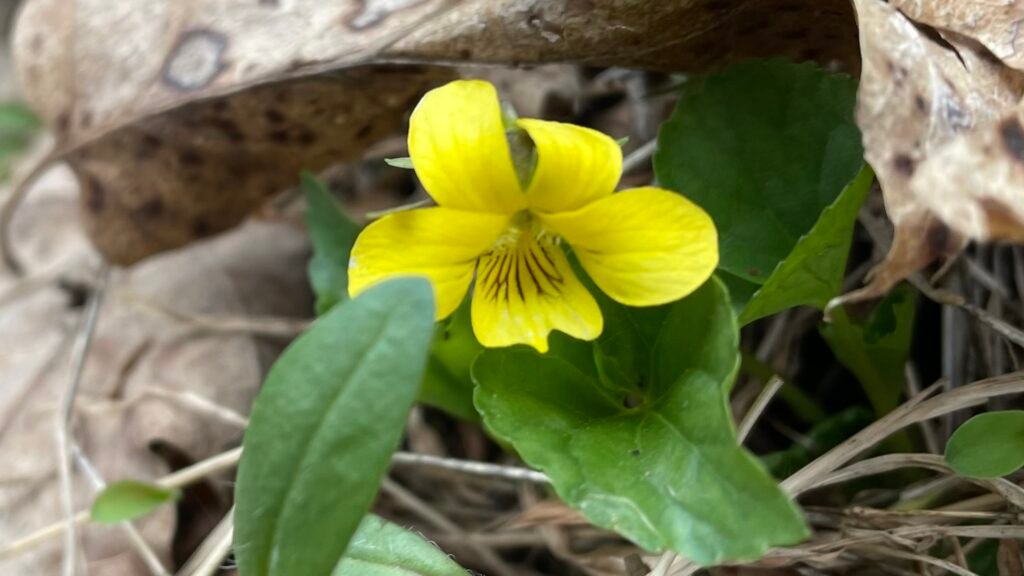
- Purple, blue, or white flowers with five petals
- Lower petal often marked with darker nectar guides called landing strips
Ecological Role
Beyond nectar, violets serve yet another purpose in the ecosystem. During the early-season blooming period, it fills many roles:
- Serves as a host plant for Fritillary butterfly caterpillars.
- Helps stable soil in low-growing patches.
- Provides early-season nectar when few plants are blooming.
The Common Blue Violet is considered a keystone “quiet supporter” in spring ecosystems. It offers both food and shelter to a variety of pollinators and other insects, creating an ecologically rich environment.
Seasonal Plant Companions (Bloom Partners)
Violets are often found blooming alongside other favored spring flowers to create a continuous nectar corridor. Spring companions include:
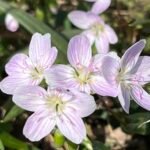
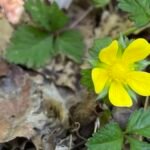
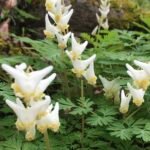
Pollinator Companions
With few blooms available, several early-season pollinators will seek out the Common Blue Violet for nectar.
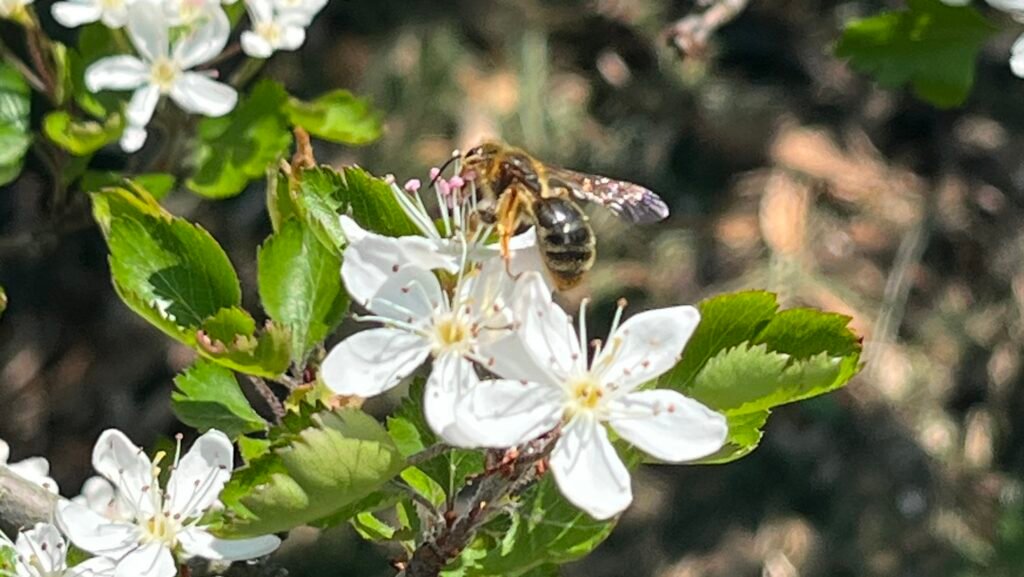
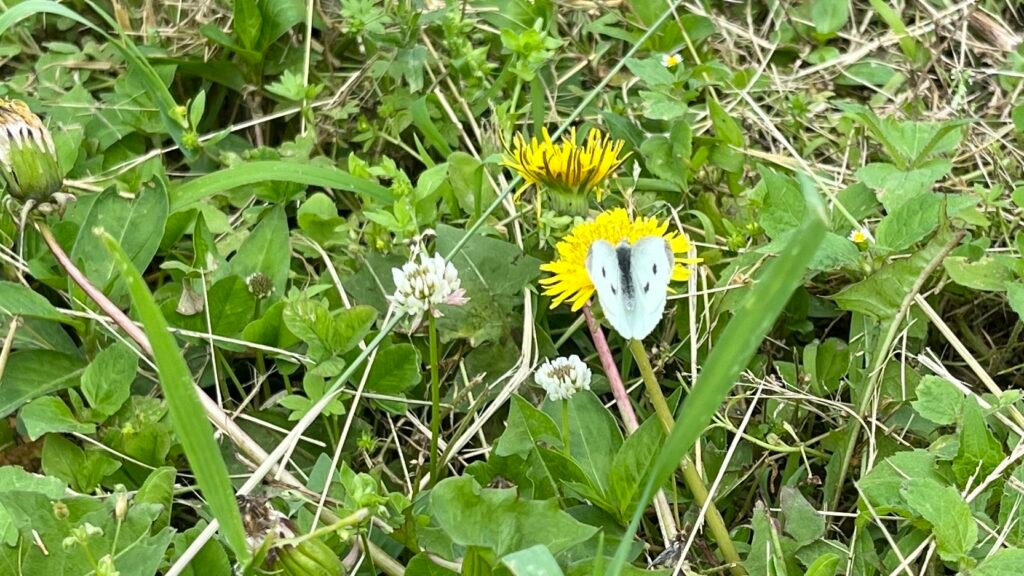
- Bees: Mining bees and Mason bees.
- Butterflies: Cabbage White, Sulphur, and the Eastern Comma.
Fun Facts
Different colors: Named for its rare color, violets can also be blue, yellow, or white.
Exploding seeds: Some violets have dry seed pods that shrink and burst, sending seeds several feet away.