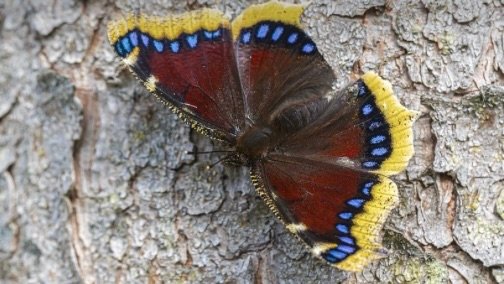
Mourning Cloak Sighting!
The Mourning Cloak, an early spring pollinator, carefully landed on a rocky stretch of road near a deciduous forest. It hovered momentarily before venturing into the rock crevices to quench its thirst from the puddles nestled between the rocks. This butterfly is among the first to emerge in early spring, often appearing before the first flowers have bloomed.
Field Note
- Date & Time: February 21, 2026, afternoon
- Species: Mourning Cloak (Nymphalis antiopa)
- Location: Central Kentucky Palisades, near a deciduous forest.
- Conditions: Partly cloudy, temperature in the mid-60s with a slight breeze.
Life Cycle and Habitat
During winter, Mourning Cloaks shelter in tree bark or under leaf litter before entering a dormant state. As soon as they emerge in the spring, they swiftly search for food before mating. Mourning Cloaks have one or two broods per year and have a longer lifespan compared to other butterflies, living for 10 to 11 months.
Food Sources
Because blooming flowers are scarce when a Mourning Cloak butterflies emerge, they primarily feed on sap flows found on trees such as willows, birches, elms. Occasionally, overripe apples on the ground will serve as another source of food. They also find water and minerals in damp areas or puddles.
Host Plants
Mourning Cloak caterpillars typically inhabit mature deciduous trees such as willows, elms, hackberries, and birches. These trees not only offer a rich source food from sap, they also become shelter during the winter.
Early-Emerging Companions
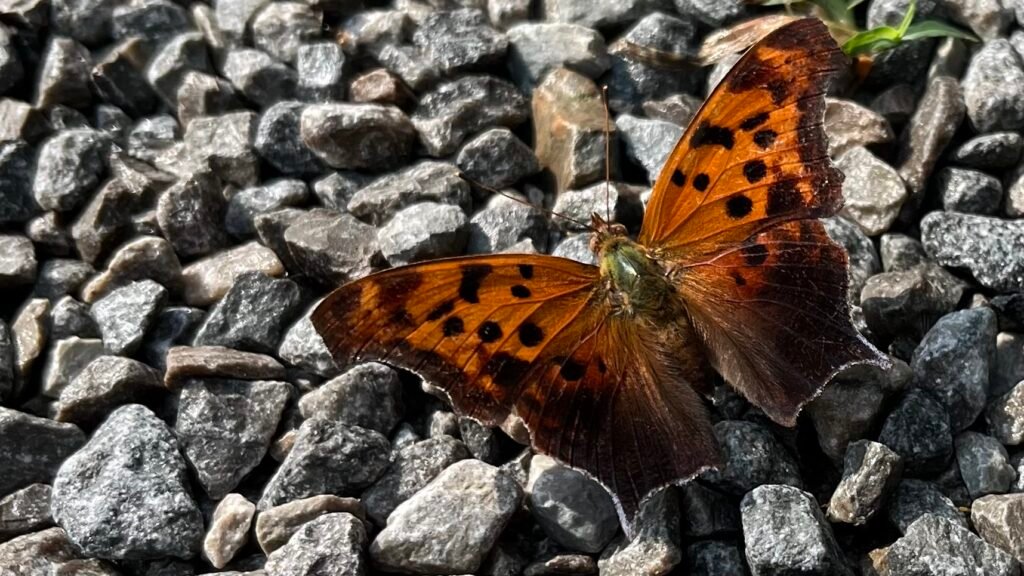
The Mourning Cloak is not the only butterfly species to emerge as an adult during this season. The Question Mark butterfly also arrives as an adult before the first spring flowers bloom. Since both species arrive before the first blooms of spring, both butterflies primarily feed on tree sap, which they find in damp, woodland areas.
Fun Facts
- Solar Collectors: Their dark, hairy-looking wings act as solar collectors while they sunbathe on tree trunks.
- To deter predators, Mourning Cloaks vibrate and make clicking noises.