
Hope is Blooming
____________________________________________________________________
The Complexity of Summer
During summer, the landscape transforms into a bustling hub of life. Following the foundation laid in spring, this season represents the peak of pollinator activity and plant reproduction. High temperatures, long daylight hours, and an abundance of blooming plants create the perfect conditions for native pollinators to raise the next generation.
____________________
Summer Activity: The Ultimate Energy Demand
For pollinators, intense summer heat triggers a period of nonstop work. This is the main reproductive window of the year. Adult bees are no longer just feeding themselves; they are tirelessly foraging for their rapidly growing larvae. At the same time, foraging butterflies are searching for host plants to lay their eggs.
For flowers, the pressure is equally high. To secure their own reproduction, plants must compete for the attention of these busy insects. The high energy demand of mid-summer requires a continuous buffet of diverse blooms. Without it, pollinator populations can experience a mid-summer crash just when the next generation needs food the most.
Bees in Summer: Hives at Peak
Throughout the summer, bees actively forage for nectar and pollen on ripe blooms. To understand your garden’s busy workforce, look for their diverse nesting styles. Ground-nesters, like mining bees, dig hidden underground tunnels, while cavity-nesters, like Leafcutter bees, use hollow stems or column-like containers. Wood-boring bees, like the carpenter bee, chew pathways into wooden structures. Additionally, social bees, like bumblebees, build bustling colonies to raise their young together.
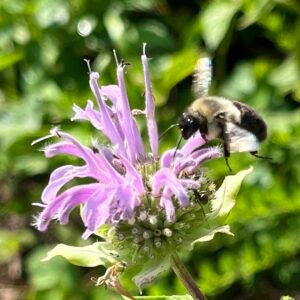
Bumblebee Workers (Social): The lonely queens of spring are now safely inside their nests. Thousands of newly hatched worker bees have taken over the daily foraging, keeping the hive buzzing at peak strength.
Leafcutter Bees (Solitary Cavity-Nesters): These solitary bees look for narrow, hollow stems to build nurseries. They use their jaws to cleanly cut neat, circular pieces out of leaves to line their nesting cells.
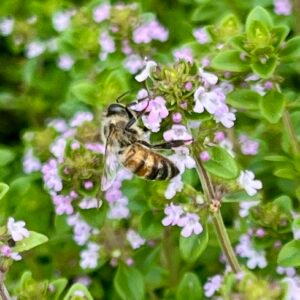
Sweat Bees (Diverse Ground & Woods Nesters): Tiny and metallic, these bees dart rapidly between small flowers. Depending on the species, they will dig into bare soil or utilize decaying logs to build their summer nests.
Gardener’s Action Step: You can directly support this diverse workforce. Leave a few plants with cosmetic leaf damage alone for leafcutters and keep a dead log in a shady spot for wood-nesters. More importantly, leave patches of bare soil for ground nesters.
____________________
Butterflies in Summer: Eggs, Caterpillars, Chrysalises
Summer generations of butterflies have a short lifespan of just 2 to 5 weeks. During this brief window, they can be seen frantically foraging for nectar on vibrant summer blooms. Look for them hovering over tall spikes of purple coneflowers and golden sunflowers or darting low across ground covers like clovers. When they are not foraging, these butterflies are entirely focused on mating and egg-laying activities to ensure the success of multiple generations before the season ends.
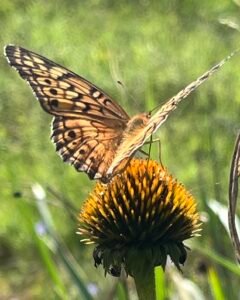
Variegated Fritillary (Euptoieta): These bright checkered butterflies size quickly fly across open spaces, frequently dropping low to the ground in search of nectar and breeding sites.
Spicebush Swallowtail (Papilio): A large, dramatic flyer, this species glides through gardens and woodland edges, relying on its large wingspan to cover wide territories in search of mates.
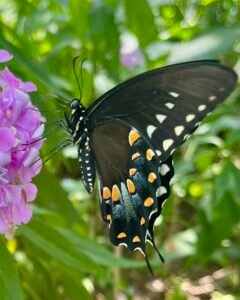
Gardener’s Action Step: Host plants play a crucial role in summer reproduction. These plants serve as the essential nurseries where butterflies lay their eggs, and caterpillars feed heavily on the leaves before undergoing pupation. You can support this life cycle by planting native host plants. Grow native milkweeds, which are the exclusive food source for Monarch caterpillars, and protect violets, the primary host plant for Fritillary butterflies. Don’t worry if your plants look tired. It is a sign of a successful butterfly nursery.
- Milkweeds are the exclusive host plant for Monarch caterpillars.
- Violets are the primary host for Fritillary butterflies.
____________________
How to Spot Summer Pollinators: Follow the Blooms
During the peak of the season, pollinators are everywhere, but they shift their behavior to beat the intense afternoon heat. To catch a glimpse of the wide variety of species, observe your garden during the bright, clear mornings when insects are fueling up after the night. Look closely at wide-open sunflowers and milkweeds, or check shaded garden borders where insects rest when midday temperatures spike.
Gardener’s Action Steps:
Provide continuous blooms: Plant a mix of flowers that bloom in June, July, and August to prevent summer food gaps.
Create a pollinator mud station: Butterflies and bees need wet mud or damp sand to extract vital minerals and salts.
Embrace a little plant damage: Remember that chewed leaves mean your garden is actively feeding the next generation of butterflies.
Offer afternoon shade: Keep a mix of tall perennials, shrubs, and trees where insects can escape the scorching sun.
A Different Way to See Your Garden
In summer, your garden becomes a vibrant ecosystem, serving as a living nursery, a feeding ground, and a sanctuary for pollinators simultaneously. When you notice chewing marks on leaves, insects on stems, or tiny eggs beneath a leaf, you are discovering the intricate life stages that make pollination possible. By supporting pollinators during the summer season, you are protecting each stage in the pollination process.
Join a Citizen Science Project.
Summer is the best time to get involved in community conservation efforts. Because insect populations are at their highest, scientists rely on backyard observation efforts to track species health and shifting migration patterns. You can make a difference right from your yard by participating in summer Bioblitzes, where you document every living thing in a specific area over a short weekend. Annual Butterfly counts help map the changing population by counting the number of a specific species. If you want to learn more, check out summer classes announced on the North American Butterfly Association (NABA) website or with your local Parks departments.
TIP: Tell-tale sign of a host plant? Lots of caterpillars and chewed leaves.
____________________
____________________________________________________________________
Resources
NATIVE PLANTS
Xerces Society: Pollinator-Friendly Native Plants by State
POLLINATORS BY SEASON
Spring Pollinators: The First Buzz of Spring
Fall Pollinators: Leaves and Stems
Winter Pollinators: Hidden Habitats
____________________