The Trailhead
Lace up your hiking boots and step off the paved path! Welcome back to Follow the Bloom Trail, a series where we use nature’s seasonal calendar to find and identify Kentucky’s amazing bees and butterflies. Three times a season we head into the wildscapes of our local nature preserves and natural areas.
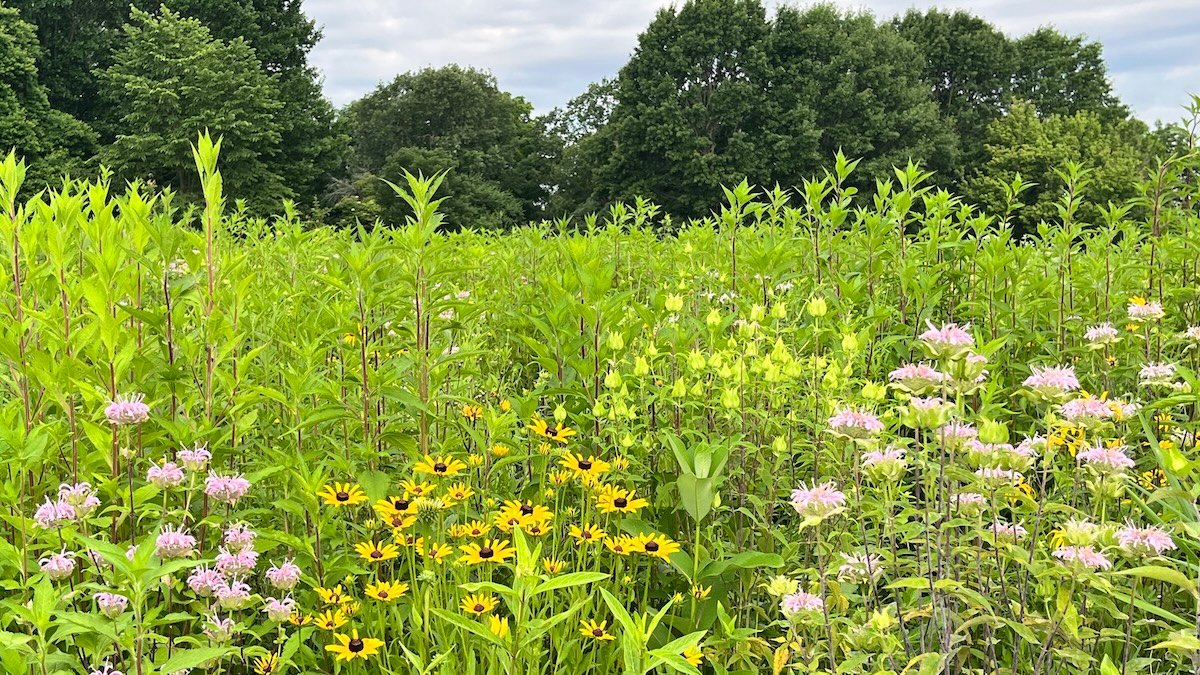
Today, our trail takes us where the open meadow meets the woods on a warm early-summer day. Standing tall above the unmanaged brush is a small group of sun-soaked Purple Echinacea and Bergamot. In these protected wild spaces, this dynamic duo draws local pollinators like a magnet.
The Closer Look
As you pause along the dirt path, you can see how these two wild beauties survive and thrive without a gardener in sight. The sturdy petals of the Purple Echinacea offer a wide, flat landing pad amidst the slim tall grasses. Nearby, the untamed crowns of the Wild Bergamot bulge with tiny, nectar-filled tubes. In the heart of this unmanicured landscape a literal all-you-can-eat buffet awaits local pollinators. Let’s slow our steps and look at the specific VIP pollinators each of these wild flowers invites to the party.
The Wild Guests of Purple Echinacea
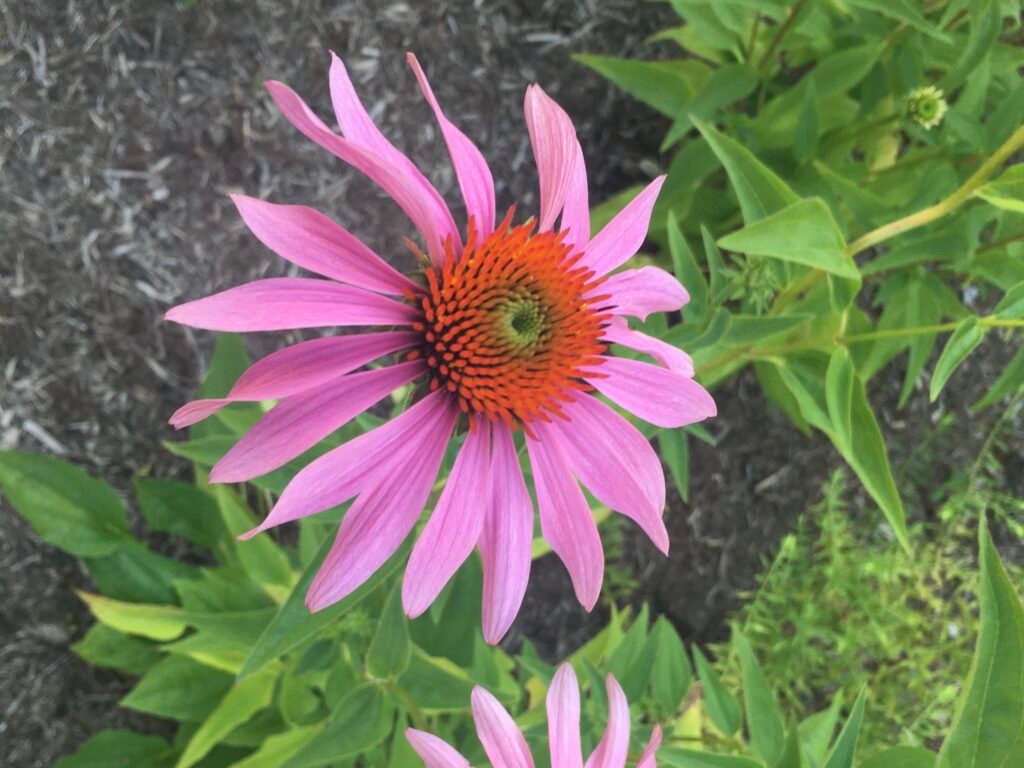
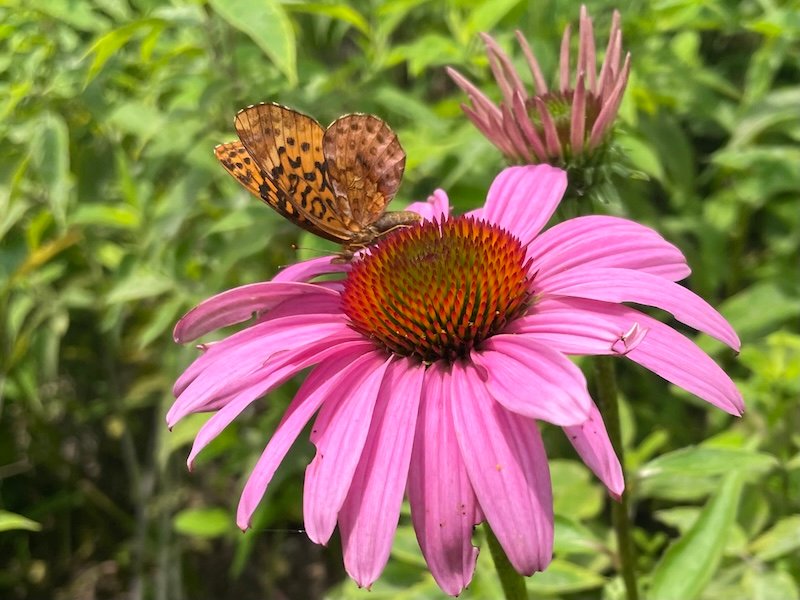
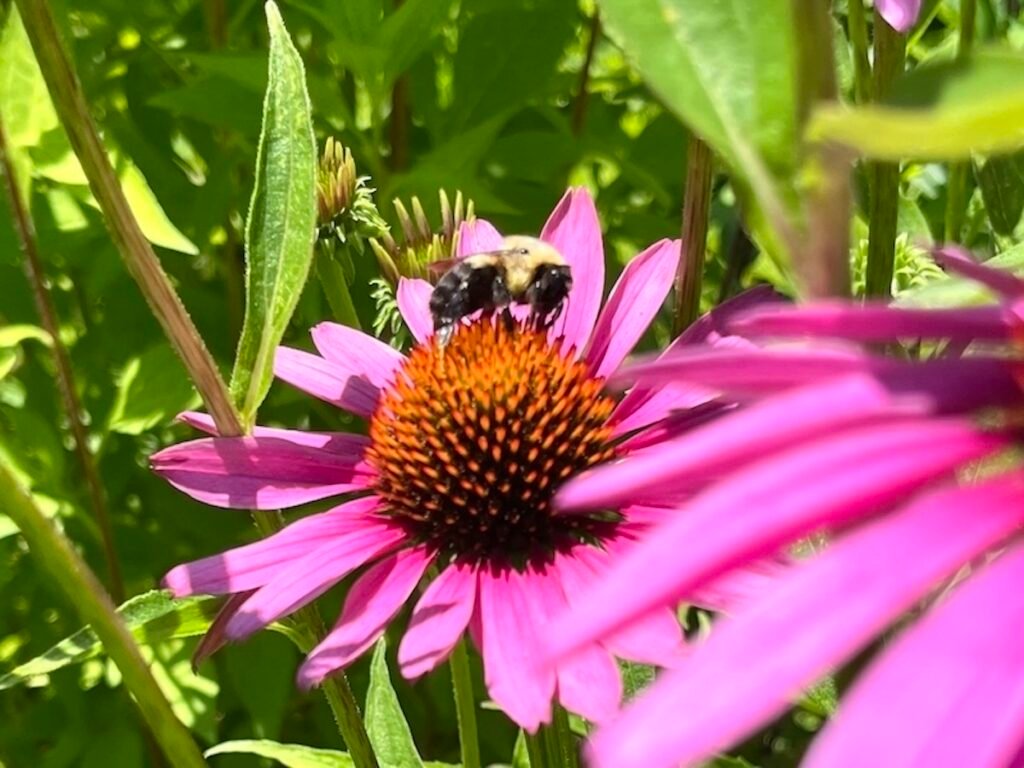
Imagine a patch of Purple Echinacea swaying in a prairie breeze on a sunny afternoon. You’re bound to see a butterfly gracefully landing on one of these magnificent flowers. These cones, with their expansive, rigid gold centers, serve as prime real estate for larger pollinators. Swallowtail butterflies treat the wide flower cones like helipads, landing effortlessly, uncoiling their long tongues, and sipping nectar with ease. Meanwhile, heavy-bodied bumblebees lumber from cone to cone, weighed down by the bright yellow pockets of wild pollen clinging to their bodies. It’s the constant, bustling activity of these pollinators that makes the Echinacea the ultimate wilderness theater.
The Wild Guests of Bergamot
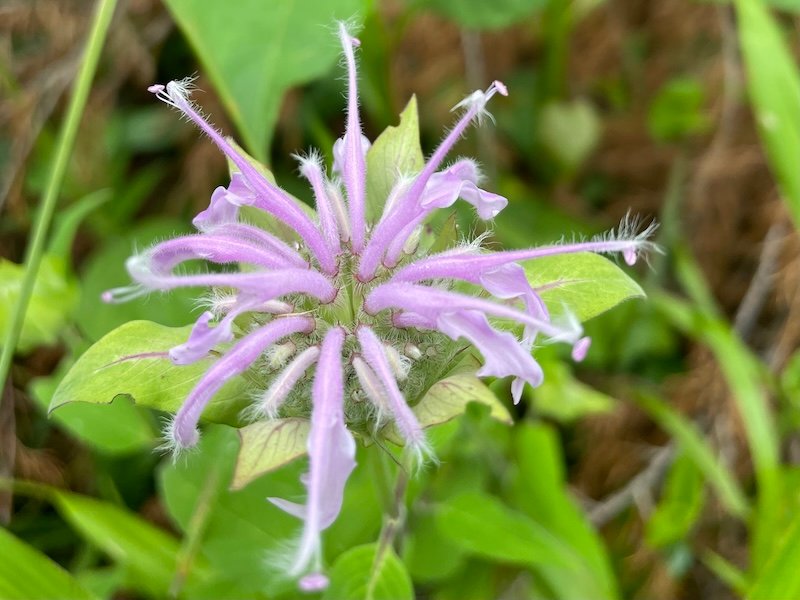
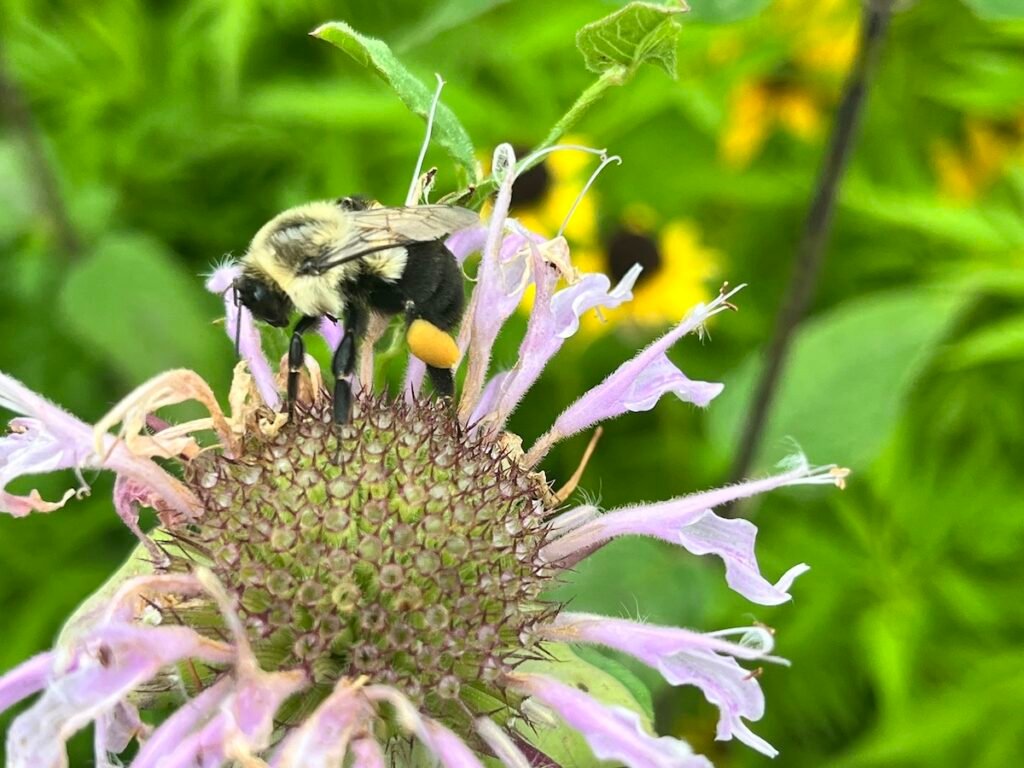
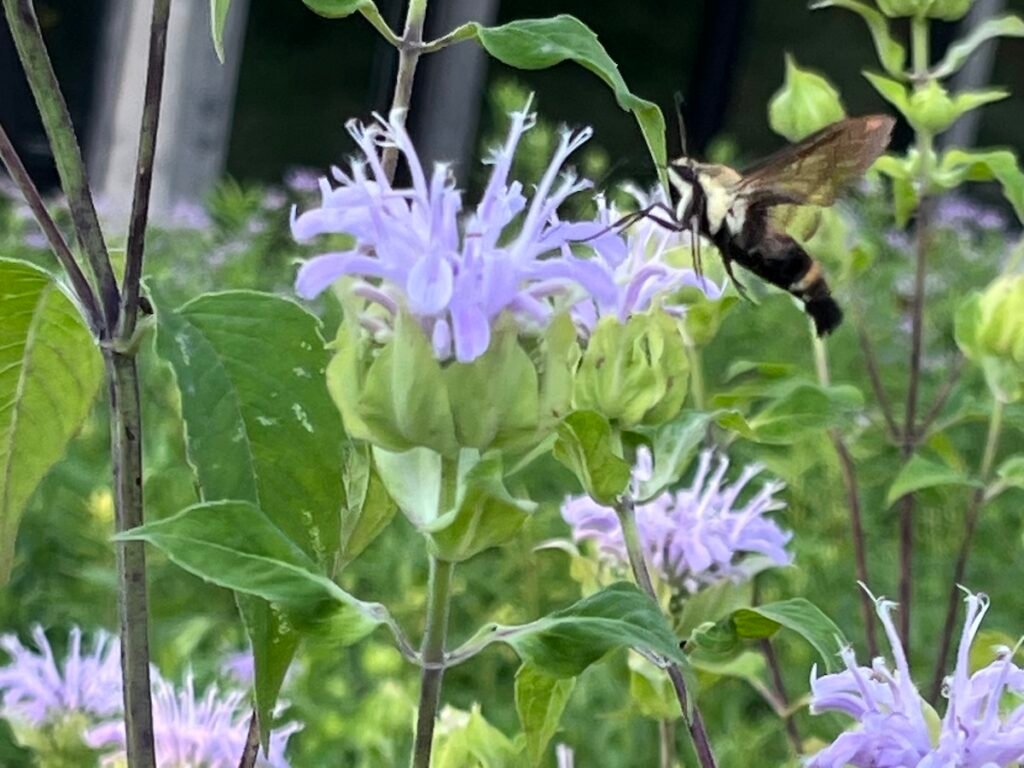
Wild Bergamot (Monarda fistulosa), also known as bee balm, is a high-energy crossroads on the trail. Growing in clusters along the woodland edge, its purple-crowned blossoms are packed with tubes of sweet nectar attract an immense variety of pollinators. This makes it an absolute favorite flower for acrobatic honey bees and native long-tongued bees, who dive headfirst into the untamed petals. But the true star of this wild Bergamot show is the Clearwing Hummingbird, hovering mid-air with blurred wings as it zips from tube to tube. The scene is chaotic, noisy, and beautifully alive.
How to Bring the Trail to Your Backyard
Want to attract these same beautiful guest to your home The best place to find native flowering plants is your local independent nursery or garden center. Many stores feature dedicated sections for plants that naturally thrive in your regional soil and climate conditions. If you want to research before you shop, here are two incredible free resources:
- For a concise, yet comprehensive list of native plants by region, visit Xerces Society: Check out their Pollinator Friendly Native Plant List. for a concise regional guide filled with practical native gardening tips.
- Pollinator Partnership: Explore their Selecting Plants for Pollinators regional guides. This is a comprehensive, deeply informative handbook covering trees, flowers, shrubs and the regions ecological climate.