Furrow Bee Sighting!
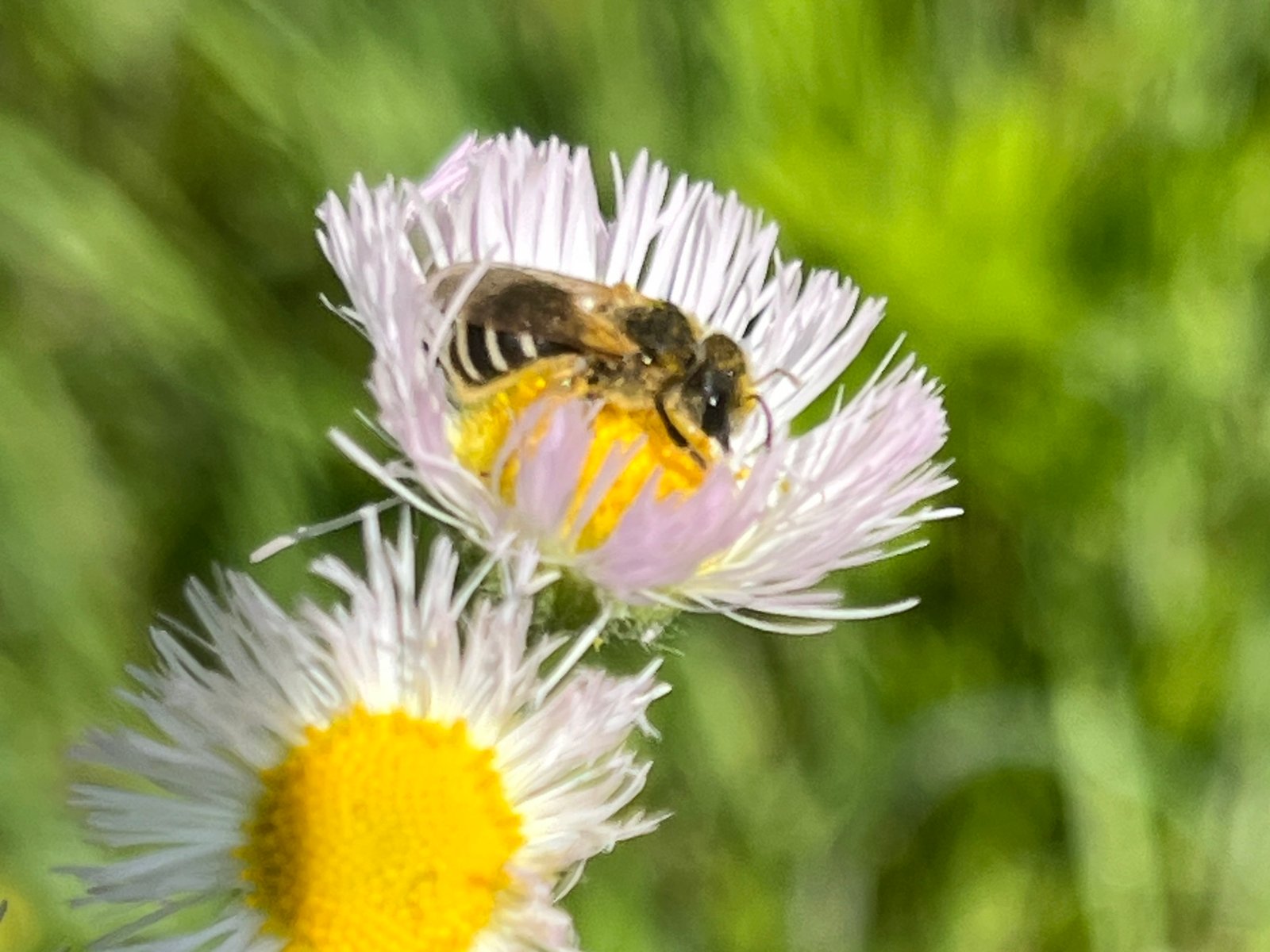
This tiny Furrow bee hovered above the open bloom of the tall, thinned-stemmed Fleabane flower, a mid-spring bloomer. This small bee eagerly collected nectar from the small, tightly-packed tubes that form the Fleabane’s solid yellow centered.
Field Note
- Date & Time: April 24, 2026, afternoon
- Species: Furrow Bee (Halictus)
- Location: Kentucky, Bluegrass Region, urban park, pollinator garden
- Weather: Warm, mid 70°F, sunny
____________________________________________________________________
Furrow Bees: Life Cycle and Habitat
Unlike many bees, mated furrow bee queens overwinter underground in nests. When they finally emerge in the spring, they typically produce two broods per year. The first brood consists of female workers who help expand the nest, while the second brood includes males and new queens for the following year.
Social & Nesting Habits
Furrow bees are ground-nesters. To find them, look for tiny volcano-like mounds of soil on bare patches of earth or south facing embankments. Most species, like the Halictus genus, are eusocial. This means they have a sophisticated social structure with a queen and worker bees, similar to honeybees, but on a much smaller underground scale.
Garden Menu: Pollen & Nectar Sources


The short-tongued furrow bee, a generalist bee, enjoys a wide range of flowers. They focus on short-tubed composite flowers such as the Fleabane or Purple Coneflower. Composite flowers have compact centers made up of tightly packed short-tubes, and are often referred to as disc flowers. Due to their tightly woven structure, composite flowers make excellent landing pads for furrow bees.
Although furrow bees lay eggs on many host plants, the Wild Aster is an essential host plant especially during the fall season. The Wild Aster offers an abundance of late-season pollen which ensures that queens bees are well-fed before winter.
__________________________________________________________________
Furrow Bee Fun Facts
The Sweat Bee Connection: Furrow bees belong to the Halictidae family, often called the “sweat bees” because they are attracted to the salt in human perspiration.
Metallic Glamour: While many are dull, some of these bees have a stunning metallic green or bronze sheen that glimmers like jewelry when hit with sunlight!
__________________________________________________________________