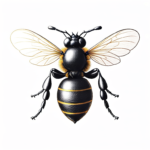

Eastern Carpenter Bee Sighting!
An Eastern Carpenter Bee hovered the near the blooms on a lavender plant. With its proboscis extended, the large bee searched for nectar and pollen, an essential activity after emerging from winter dormancy in early spring.
- Date & Time: March 25, 2026, afternoon
- Species: Eastern Carpenter Bee (Xylocopa virginica)
- Location: Central Kentucky, herb and vegetable garden
- Weather: Warm, mide 70°F, sunny
Life Cycle and Habitat
Eastern Carpenter Bees, depending on their region, generally have a long lifespan. Their life cycle begins in early spring when overwintering adults emerge to mate. During this time, females construct nests by building tunnels in wood structures, where they will lay their eggs and care for the larvae. Towards the end of summer, new adults emerge, and the older generation dies. The new generation forages for several weeks before returning to their nests in the fall to overwinter.
Social & Nesting Habits
Eastern Carpenter Bees, construct their nests above ground in dead wood or timber. They bore tunnels in wood structures, creating nurseries where their eggs transform into the next generation of adults. While they are generally solitary bees, each living in its own nest, some females will share a nest with a daughter. Additionally, they also can nest in close proximity to one another, forming tightly woven neighborhoods.
Pollen & Nectar Sources
Know as the generalists, Eastern Carpenter Bees forage for a diverse range of flower species. Even though they visit numerous flowers, they have a particular fondness for the Eastern Redbud. This redbud serves as a crucial, early-spring nectar source for them. Additionally, they are attracted to the nectar and pollen on Salvia and Bee Balm, and they are excellent pollinators of blueberry crops.


common- Bee Balm
__________________________________________________________________
Eastern Carpenter Bee Fun Facts
Gentle Giants: Although males may hover near you or buzz close, they actually lack a stinger.
Nature’s Carpenters: Their mandibles are strong enough to vibrate and drill perfectly circular holes into wood!
__________________________________________________________________